
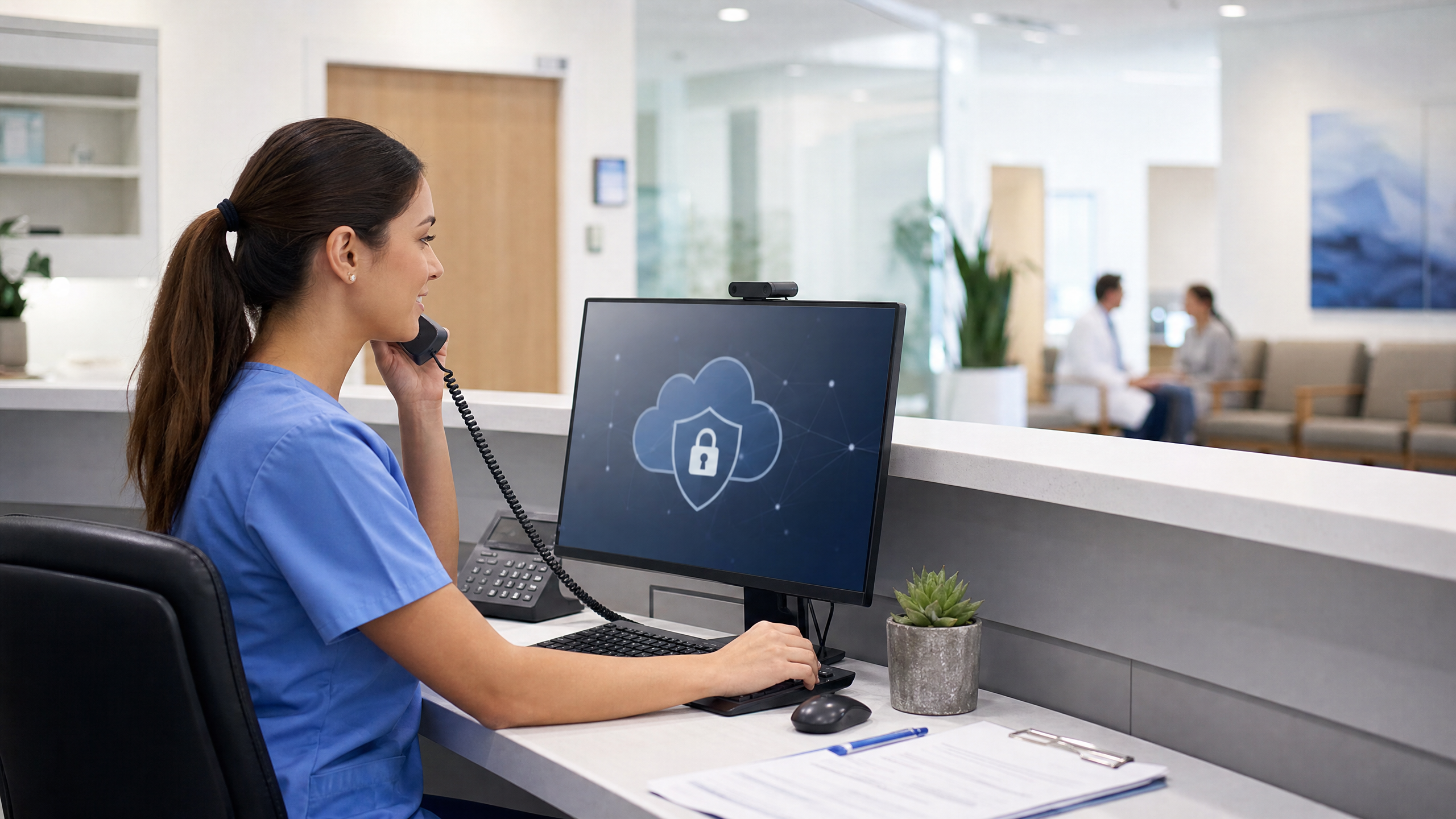
For medical practices, dental offices, and therapy clinics, a phone system is the lifeline of the business. But unlike a retail store or a plumbing company, healthcare providers carry a massive regulatory burden: the Health Insurance Portability and Accountability Act (HIPAA).
In 2026, the penalties for HIPAA violations are steeper than ever. Simple mistakes—like leaving a patient's voicemail on an unsecured smartphone—can result in fines ranging from $100 to $50,000 per violation. This is why choosing a HIPAA compliant VoIP phone system is not just a technical upgrade; it is a legal necessity.
Are Phone Calls Covered by HIPAA?
Yes and no. A standard voice conversation over a traditional landline is generally not considered Electronic Protected Health Information (ePHI). However, the moment that call interacts with modern technology—such as being recorded, transcribed, or routed through a cloud VoIP server—it becomes ePHI and falls strictly under HIPAA regulations.
Furthermore, features that modern clinics rely on—such as Voicemail-to-Email, SMS appointment reminders, and digital faxing—all transmit ePHI and must be secured.
The 4 Requirements for a HIPAA Compliant VoIP System
1. The Business Associate Agreement (BAA)
This is the most critical step. A VoIP provider is considered a "Business Associate" under HIPAA law. Before you transmit a single patient call through their servers, they must sign a BAA. This legally binding document states that the provider accepts responsibility for safeguarding your patients' ePHI. If a VoIP company refuses to sign a BAA, you cannot legally use them.
2. End-to-End Encryption
Your VoIP system must use strong encryption (such as TLS and SRTP) to protect data both "in transit" (while the call is happening) and "at rest" (when a voicemail or call recording is stored on a server).
3. Access Controls and Authentication
Not everyone in your clinic should have access to every call recording or voicemail. A compliant system allows administrators to set strict role-based access controls, ensuring that only authorized personnel can access sensitive patient communications.
4. Audit Logs
HIPAA requires you to know who accessed what data and when. Your phone system must maintain detailed audit logs showing which user listened to a specific voicemail, read an SMS, or downloaded a call recording.
Secure Communications with Zonitel
Zonitel provides robust, secure communication tools designed to help healthcare practices maintain privacy and efficiency.
- Enterprise-grade encryption for voice and data
- Secure Voicemail and Call Recording options
- Customizable access controls for your staff
Protect your patients and your practice with a modern phone system.
Learn moreThe Danger of Personal Cell Phones
One of the most common HIPAA violations occurs when doctors or therapists use their personal cell phones to text patients or check voicemails. If that phone is lost, stolen, or hacked, the practice is liable. A compliant VoIP system solves this by offering a secure mobile app. Staff can make and receive calls from their personal devices using the clinic's business number, but all the data remains securely stored in the cloud, never saved locally on the device itself.
Upgrade Your Clinic's Phone System
Provide better patient experiences with a secure, reliable VoIP phone system from Zonitel.